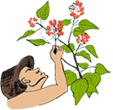

lymph node disease

(In territories with significant traditional TRAMIL use)

Dominican Republic:

  • bejuco caro

Haiti:

  • lyann mòl
Significant uses found by the TRAMIL surveys

  leaf, lightly toasted, local application1-2

Recommendations Preparation and Dosage References

According to the information available:

Topical use for abscesses, lymph node disease and boils is classified as REC based on the significant traditional use documented in the TRAMIL surveys, the validation, toxicity and dermal irritability studies and the scientific information published.

All topical application must follow strict hygiene measures that prevent contamination or additional infection.

If deterioration is observed in the patient, if the abscess, lymph node disease and boils persist for more than 5 days, seek medical attention.

Oral use for colds, coughs and flu is classified as REC based on the significant traditional use documented in the TRAMIL surveys and the toxicity studies.

If deterioration is observed in the patient, and the cold, cough or flu persists for more than 5 days, seek medical attention.

Contraindicated in people susceptible to nervous depression or with antidepressant treatments.

Not for use during pregnancy because it can cause miscarriage, nor while breastfeeding or in children under 5 years of age.

The use for abscesses or lymph node disease:
wash the wound with boiled water and soap. Wash the leaves adequately, heat them slightly over a fire, take 5–10 grams of the plant material and apply directly to the injury. Cover with a dressing or a clean cloth and change twice a day.

For boils:
wash the injury with boiled water and soap, apply on the affected area in sufficient quantities. Cover with a dressing or clean cloth and change twice a day.

For use in colds, coughs or flu:
prepare a decoction with 30 grams of leaves in 4 cups (1 litre) of water, boil for 10 minutes in a covered vessel. Leave to cool, strain (filter) and drink 3 cups a day.

Preparations must never be stored for more than 24 hours, even if refrigerated.

1 WENIGER B, ROUZIER M, 1986
Enquête TRAMIL. Service Oecuménique d'Entraide SOE, Port au Prince, Haïti.

2 GERMOSEN-ROBINEAU L, GERONIMO M, AMPARO C, 1984
Encuesta TRAMIL. enda-caribe, Santo Domingo, Rep. Dominicana.

3 WENIGER B, SAVARY H, DAGUIHL R, 1984
Tri phytochimique de plantes de la liste TRAMIL. Laboratoire de chimie des substances naturelles, Faculté de Médecine et de Pharmacie, Université d'Etat d'Haïti, Port au Prince, Haïti.

4 PINEDA M, 1990
Fitoquímica de algunas plantas TRAMIL. Laboratorio enda-caribe, Santo Domingo, Rep. Dominicana.

5 GARCIA MD, QUILEZ AM, SAENZ MT, MARTINEZ-DOMINGUEZ ME, DE LA PUERTA R, 2000
Anti-inflammatory activity of Agave intermixta Trel. and Cissus sicyoides L., species used in the Caribbean traditional medicine. J Ethnopharmacol 71:395-400.

6 BELTRAME FL, SARTORETTO JL, BAZOTTE RB, CUMAN RN, CORTEZ DAG, 2001
Estudo fitoquímico e avaliação do efeito antidiabético do Cissus verticillata L (Vitaceae). Química Nova 24:783-785.

7 BARBOSA WLR, SANTOS WRAS, PINTO LN, TAVARES ICC, 2002
Flavonóides de Cissus verticillata e a atividade hipoglicemiante do chá de suas folhas. Rev Bras Farmacognosia 12:13-15.

8 DE SOUSA C, DE PAIVA T, BEZERRA P, FALCÃO J, OLIVEIRA F, SILVEIRA E, FERREIRA J, FREIRE D, RODRIGUES M, CLEA F, DE SOUSA F, DE CASTRO D, DA ROCHA S, DE BARROS G, 2007
Anti-diabetic activity of a fraction from Cissus verticillata and tyramine, its main bioactive constituent, in alloxan-induced diabetic rats. American J of Pharmacology and Toxicology 2(4):178-188.

9 STANDLEY PC, 1937
The flora of Costa Rica, Pt. I. Bot Serv Field Mus Nat Hist 18(391):398.

10 MARTINEZ MJ, LOPEZ M, BOUCOURT E, FUENTES V, MORON F, 2002
Evaluación de la actividad antiestafilocóccica de Cissus verticillata. Informe TRAMIL. Laboratorio Central de Farmacología, Facultad de Ciencias Médicas "Dr. Salvador Allende", La Habana, Cuba.

11 LE GRAND A, WONDERGEM PA, 1986
Activités antimicrobiennes et études bibliographiques de la toxicologie de dix plantes médicinales de la Caraïbe. Rapport TRAMIL. Dép. de Pharmacognosie, Universités de Groningen & Leyden, Hollande.

12 FENG PC, HAYNES LJ, MAGNUS KE, PLIMMER JR, 1964
Pharmacological screening of some West Indian medicinal plants. J Pharm Pharmacol 16:115-117.

13 JIU J, 1966
A survey of some medicinal plants of Mexico for selected biological activities. Lloydia 29:250-259.

14 GARCIA MD, QUILEZ AM, SAENZ MT, MARTINEZ DOMINGUEZ ME, DE LA PUERTA R, 2000.
Anti-inflammatory activity of Agave intermixta Trel. and Cissus sicyoides L., species used in South Caribbean traditional medicine.
J Ethnopharmacol 71(3):395-400.

15 MARTINEZ MJ, LOPEZ M, BOUCOURT E, BETANCOURT J, FUENTES V, MORON F, 2002.
Irritabilidad dérmica primaria de Cissus verticillata. Informe TRAMIL. Laboratorio Central de Farmacología, Facultad de Ciencias Médicas "Dr. Salvador Allende", La Habana, Cuba.

16 MARTINEZ MJ, LOPEZ M, BOUCOURT E, BETANCOURT J, FUENTES V, MORON F, 2002.
Toxicidad aguda tópica de Cissus verticillata. Informe TRAMIL. Laboratorio Central de Farmacología, Facultad de Ciencias Médicas "Dr. Salvador Allende", La Habana, Cuba.

17 CAMBAR P, 1992
Efecto de los extractos acuosos de Cissus verticillata L. Informe TRAMIL. Unidad de Farmacología, Facultad de Ciencias Médicas, Universidad Nacional de Honduras UNAH, Tegucigalpa, Honduras.
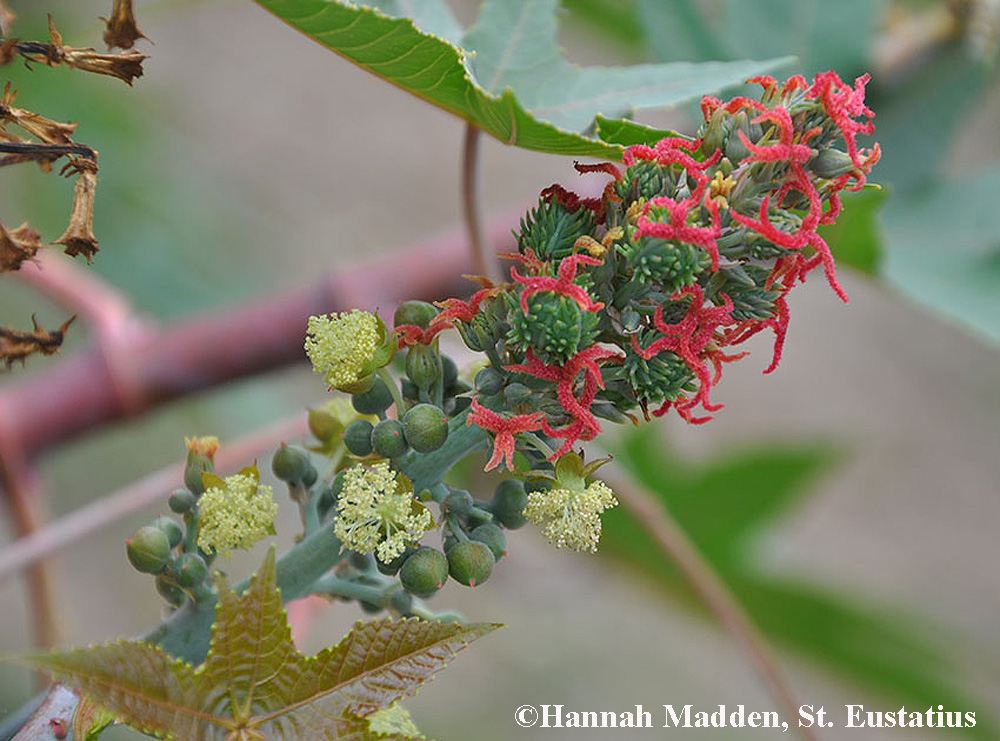
(In territories with significant traditional TRAMIL use)

Guadeloupe:

  • carapate
  • karapat
  • karapat blanc

Barbados:

  • castor oil

Dominica:

  • cawapat

Saint Lucia:

  • cawapat

Dominican Republic:

  • higuera

Haiti:

  • maskèti

Martinique:

  • palma Kristi
  • ricin
Significant uses found by the TRAMIL surveys

seed oil, applied locally1

Recommendations Preparation and Dosage References

According to the information available:

The use of the seed oil for lymph node conditions, burns, rheumatism, twists and trauma is classified in the REC category based on the significant traditional use documented in the TRAMIL surveys, the toxicity studies and the scientific information published.

If deterioration is observed in the patient or the lymph node condition, burn, rheumatism, twist or trauma persist for more than 7 days, seek medical attention.

All topical application must follow strict hygiene measures that prevent contamination or additional infection.

Traditional use should be limited to superficial burns (epidermal damage) that are minor (less than 10% of the body surface) and located outside high-risk areas such as the face, hands, feet and genitals. 

The use for headaches, toothaches, the seed oil for lung disease, asthma, the leaves for burns and rheumatism is classified in the REC category based on the significant traditional use documented in the TRAMIL surveys and the toxicity studies.

The use of the seed oil orally for constipation, lung disease, asthma and intestinal parasites is classified in the REC category based on the significant traditional use documented in the TRAMIL surveys and the scientific information published.

For oral use of seed oil, use a single dose.

Due to the health risk of lung disease, asthma and lymph node conditions, an initial medical assessment is recommended. The use of this resource can be considered complementary to medical treatment, unless contraindicated.

The seed can produce hypersensitivity reactions.

Use the oil obtained in the traditional way according to the traditional procedures, or those as described by the pharmacy or authorised dispensary. Industrially produced castor oil for non-medical uses may not have undergone detoxification of the albumin by steam and may be a highly toxic product and imminently life-threatening if ingested.

Not for use during pregnancy, breastfeeding or in children under 12 years.

For constipation:
take seed oil (purchased at a pharmacy or authorised health centre) at a dose of 1-3 tablespoons (15-45 millilitres) for adults, 1-3 teaspoons (5-15 ml) for children over 2 years of age and 1-5 ml for children under 2 years of age. Administer in a single oral dose on an empty stomach. If necessary, accompany with milk, tea or fruit juice38.

For burns, lung disease and asthma, lymph node conditions, headaches, rheumatism, twists or trauma:
wash the injury with boiled water and soap in particular in the case of burns, apply the oil on the affected area, 2-5 cc with a clean dressing or cloth in case of burns and in sufficient quantities for rubbing (for lung disease and asthma) or small massages with circular movements in the other cases.

Also for burns, headaches, rheumatism, twists and trauma, it is possible to take 30 grams of fresh or dried leaves, whichever the case may be, heat or crush them, apply to the affected area, cover with a clean cloth and change 2-3 times a day.

For toothache:
prepare a decoction with 30 grams of leaves in 4 cups (1 litre) of water, boil for 5 minutes in an open vessel. Allow to cool, strain (filter) and rinse 3 times a day, taking care not to swallow.

Preparations must never be stored for more than 24 hours, even if refrigerated.

1 WENIGER B, ROUZIER M, 1986
Enquête TRAMIL. Service Oecuménique d'Entraide SOE, Port au Prince, Haïti.

2 JEAN-PIERRE L, 1988
TRAMIL survey. St Lucia national herbarium, Castries, St Lucia.

3 EDOUARD JA, 1992
Enquête TRAMIL. Lycée agricole, Baie-Mahault, Guadeloupe.

4 FAUJOUR A, MURREY D, CHELTENHAM-CORBIN B, CARRINGTON S, 2003
TRAMIL survey. enda-caribbean, IICA & UAG, Saint Thomas, Barbados.

5 BALZ E, BOYER A, BURAUD M, 2007
Enquête TRAMIL à Marie-Galante. U. Bordeaux 3, U. Paris XI Chatenay-Malabry, UAG, Guadeloupe.

6 GERMOSEN-ROBINEAU L, GERONIMO M, AMPARO C, 1984
Encuesta TRAMIL. enda-caribe, Santo Domingo, Rep. Dominicana.

7 CHARLES C, 1988
TRAMIL survey. Movement for Cultural Awareness MCA, Roseau, Dominica.

8 BOULOGNE I, 2008
Enquête TRAMIL à Terre-de-Haut, Les Saintes, UAG, Guadeloupe (FWI).

9 WENIGER B, 1987-88
Encuesta TRAMIL. enda-caribe, Santo Domingo, Rep. Dominicana.

10 BOYER A, BURAUD M, 2007
Enquête TRAMIL à La Désirade. U. Paris XI Chatenay-Malabry, UAG, Guadeloupe.

11 LONGUEFOSSE JL, NOSSIN E, 1990-95
Enquête TRAMIL. Association pour la valorisation des plantes médicinales de la Caraïbe AVPMC, Fort de France, Martinique.

12 HEGNAUER R, 1973
Chemotaxonomy der Pflanzen. Basel, Schweiz: Birkhauser Verlag.

13 CHONKEL A, 1985
A propos de quelques graines toxiques existant à la Guadeloupe. Thèse Pharmacie, Montpellier, France.

14 DUKE JA, 1992
Handbook of phytochemical constituents of GRAS herbs and other economic plants. Boca Raton, USA: CRC Press.

15 DUKE JA, ATCHLEY AA, 1986
Handbook of proximate analysis tables of higher plants. Boca Raton, USA: CRC Press. p140.

16 DE SOUSA M, Matos ME, Matos FJ, MACHADO MI, CRAVEIRO AA, 1991
Constituintes químicos ativos de plantas medicinais Brasileiras. Laboratorio de produtos naturais, Fortaleza, Brasil: Ceará Edições UFC.

17 TSUPRIENKOVA T, 1982
Patente de autor de champú para el lavado del cabello (título original en ruso). URSS, A61K 7/06(53).

18 WENIGER B, 1992
Activités biologiques (cytotoxicité, effet sur la croissance, effet immunomodulateur) de drogues végétales de la Caraïbe utilisées par voie locale contre les brûlures, dans des systèmes de cellules animales et humaines en culture. Faculté de Pharmacie, Université de Strasbourg, Illkirch, France.

19 FRIAS AI, CABRERA H, GARCIA N, MORON F, VICTORIA MC, GERMOSEN-ROBINEAU, 2011
Efecto antiinflamatorio tópico del aceite de semilla de Ricinus communis (aceite de ricino) en el edema de la oreja inducido por aceite de Croton en ratones. Trabajo TRAMIL. Laboratorio Central de Farmacología. Universidad de Ciencias Médicas de La Habana, Cuba.

20 VERPOORTE R, DIHAL PP, 1987
Medicinal plants of Surinam IV. Antimicrobial activity of some medicinal plants. J Etnopharmacol 21(3):315-318.

21 MISAS CA, HERNANDEZ NM, ABRAHAM AM, 1979
Contribution to the biological evaluation of Cuban plants. I. Rev Cub Med Trop 31:5-12.

22 TANIRA MO, AGEEL AM, AL-SAID MS, 1989
A study on some Saudi medicinal plants used as diuretics in traditional medicine. Fitoterapia 60(5):443-447.

23 CECIL, RUSELL LA FAYETTE, 1987
Compendio de Medicina Interna. Madrid, España: Ed. Interamericana.

24 MARTINEZ MJ, LOPEZ M, MOREJON Z, BOUCOURT E, FUENTES V, MORON F, 2005
Irritabilidad dérmica primaria de semillas frescas peladas y machacadas de Ricinus communis L. Informe TRAMIL. Laboratorio Central de Farmacología, Facultad de Ciencias Médicas “Dr. Salvador Allende”, La Habana, Cuba.

25 MARTINEZ MJ, MOREJON Z, BOUCOURT E, FUENTES V, MORON F, 2003
Irritabilidad dérmica primaria de hoja seca y de hoja fresca de Ricinus communis L. Informe TRAMIL. Laboratorio Central de Farmacología, Facultad de Medicina “Dr. Salvador Allende”, La Habana, Cuba.

26 ROCHA E SILVA M, 1943
Studies on poisonous plants in the state of Sao Paulo. Toxicological expts on 27 plants which have been suspected of toxicity. Arq Inst Biol (Sao Paulo) 14:15.

27 CANELLA CFC, TOKARNIA CH, DOBEREINER J, 1966
Experiments with plants supposedly toxic to cattle in Northeastern Brazil, with negative results. Pesqui Agropecu Brasil Ser Vet 1:345-352.

28 KHOLKUTE SD, MUDGAL V, DESHPANDE PJ, 1976
Screening of indigenous medicinal plants for antifertility potentiality. Planta Med 29(2):150-155.

29 KANERVA L, ESTLANDER T, JOLANKI R, 1990
Long-lasting contact urticaria from castor bean. J Amer Acad Dermatol 23(2):351-355.

30 GOWANLOCH JN, BROWN CA, 1943
Poisonous snakes, plants and black widow spider of Louisiana, Dept. Conservation, New Orleans,Louisiana. Book.

31 OZTEKIN-MAT A, 1994
Plant poisoning in Turkey. Ann Pharm Fr 52(5):260-265.

32 KOPFERSCHMITT J, FLESCH F, LUGNIER A, SAUDER P, JAEGER A, MANTZ JM, 1983
Acute voluntary intoxication by ricin. Human Toxicol 2(2):239-242.

33 CANIGUERAL S, 2003
Ricinus comunis. Vademecum de Fitoterapia, Editorial Masson, Barcelona, España, Jul.30,2003. URL: www.masson.es/book/fitoterapia.html

34 IRWIN R, 1992
Toxicity studies of castor oil in F344/N rats and B6C3F1 mice (dosed feed studies). Natl Toxicol Program Tech Rep SER 1992:25.

35 WEE YC, GOPALAKRISHNAKONE P, CHAN A, 1988
Poisonous plants in Singapore - a colour chart for identification with symptoms and signs of poisoning. Toxicon 26(1):47.

36 ALONSO J, 1998
Tratado de fitomedicina. Bases clínicas y farmacológicas. Buenos Aires, Argentina: ISIS ediciones SRL. p840.

37 FERNANDO R, 1988
Plant poisoning in Sri Lanka. Toxicon 26(1):20.

38 PERIS JB, STUBING G, 2003
Ricinus comunis. Vademecum de Fitoterapia, Editorial Masson, Barcelona, España, Jul.30,2003. URL: www.masson.es/book/fitoterapia.html