
Vernacular names
(In territories with significant traditional TRAMIL use)
Martinique:
- tamarin
Honduras:
- tamarindo
Cuba:
- tamarindo
Dominican Republic:
- tamarindo
Geographical distribution
Native to tropical Africa, nowadays cultivated in the tropical areas all over the world.
Botanical description
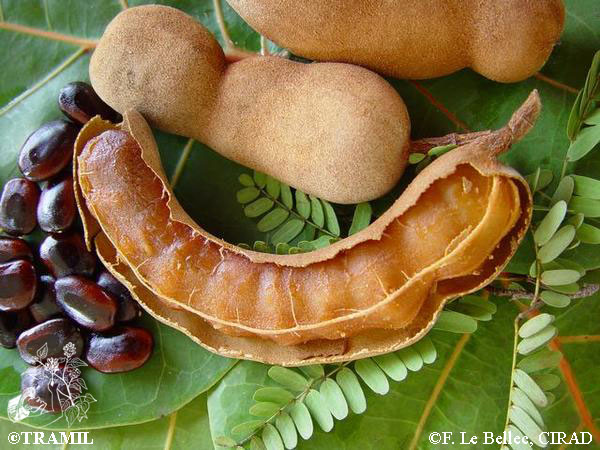
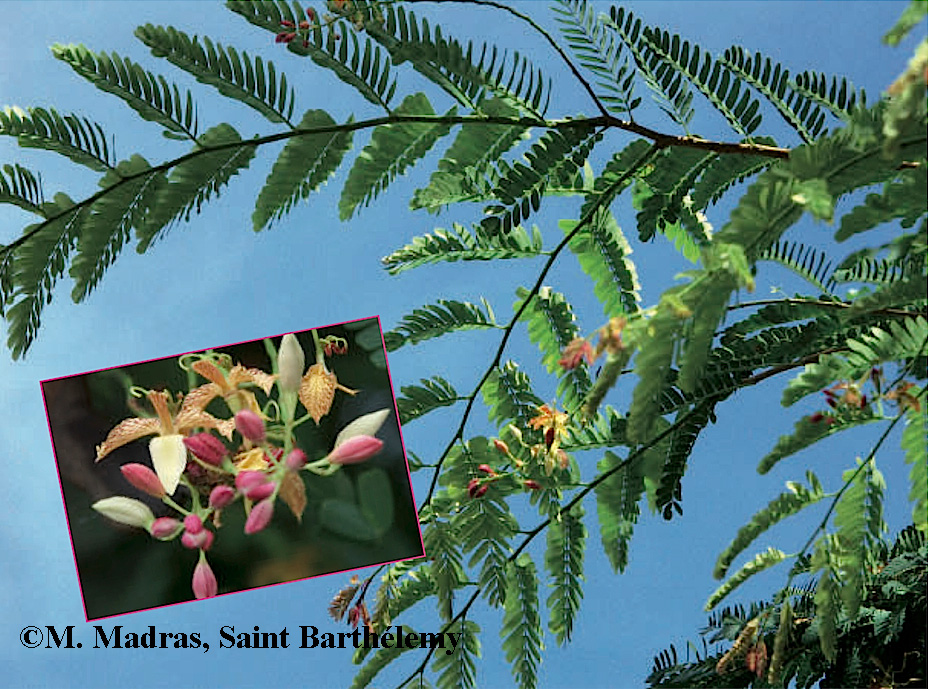
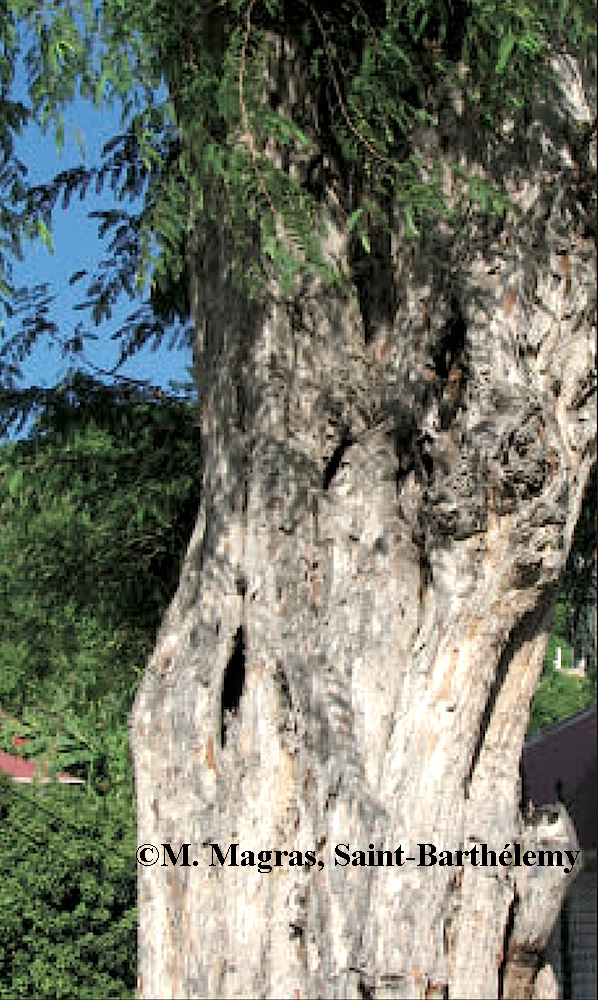
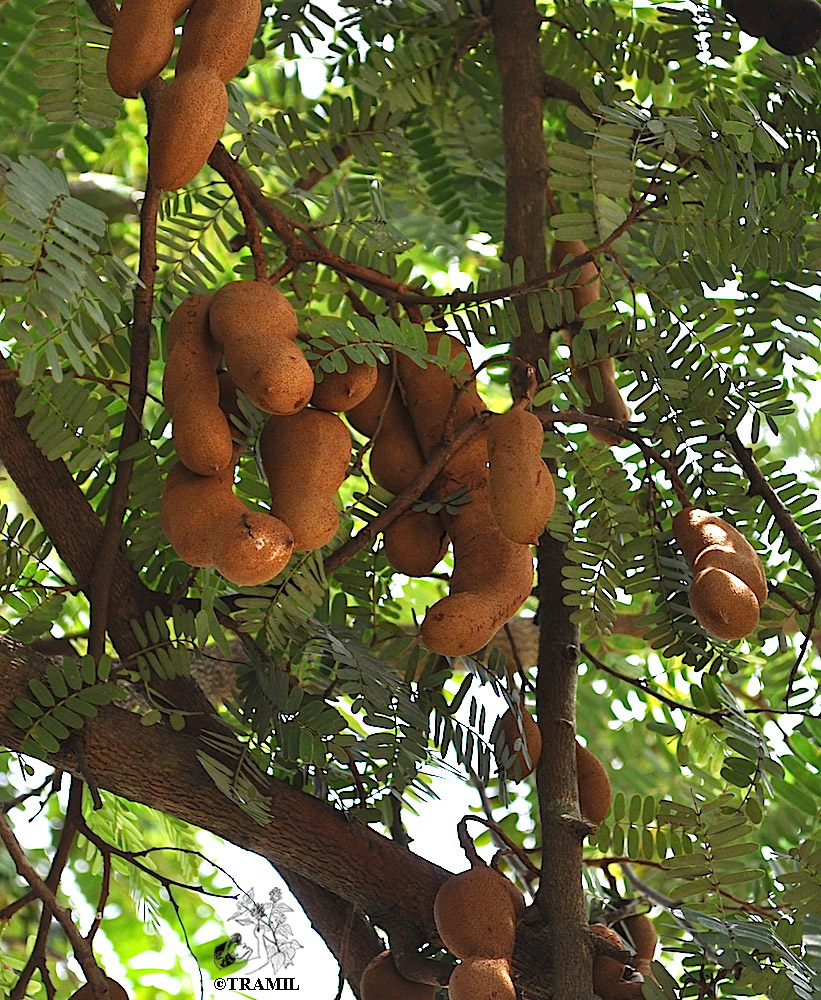
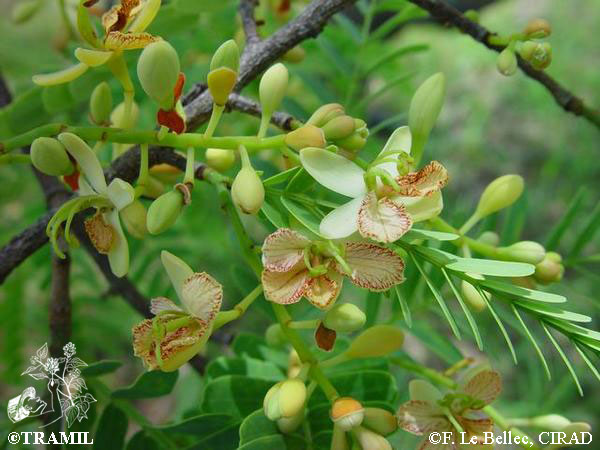
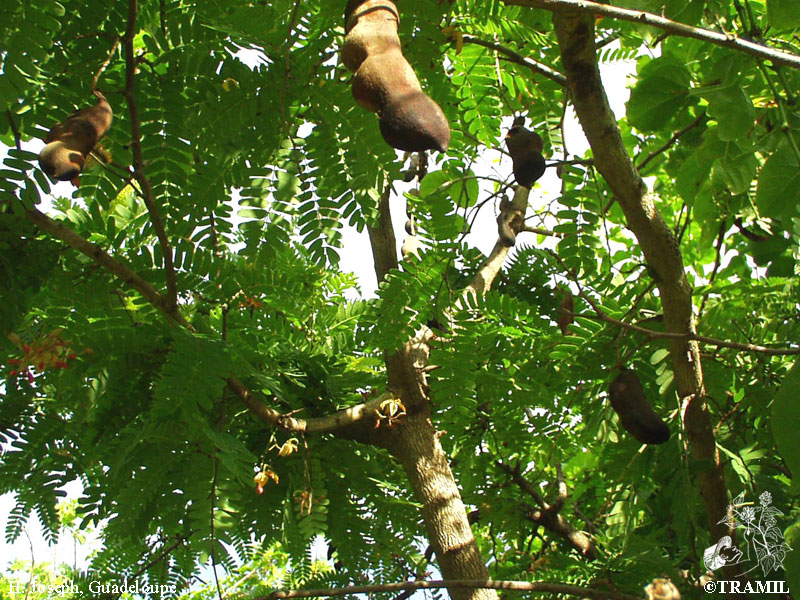
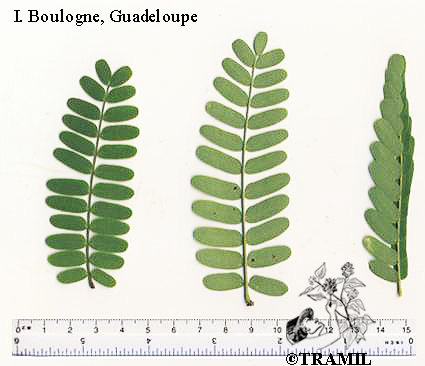
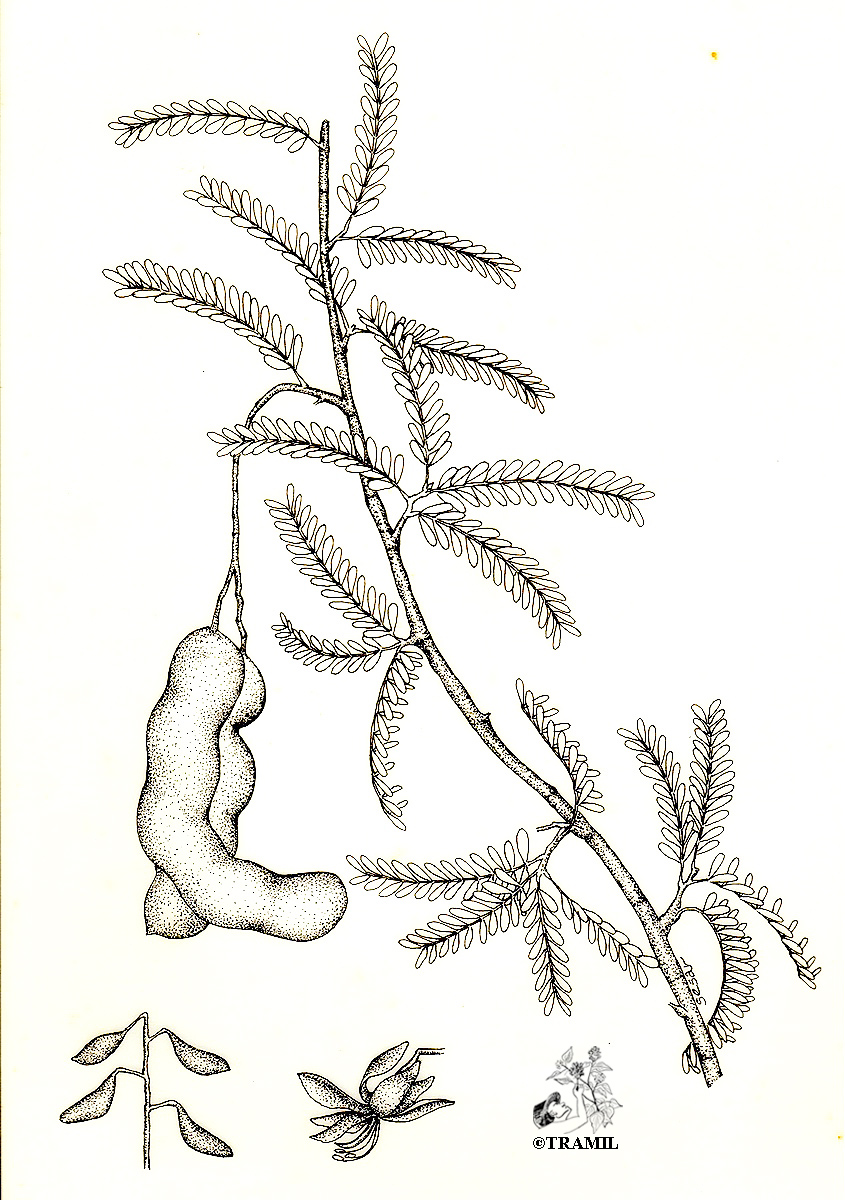
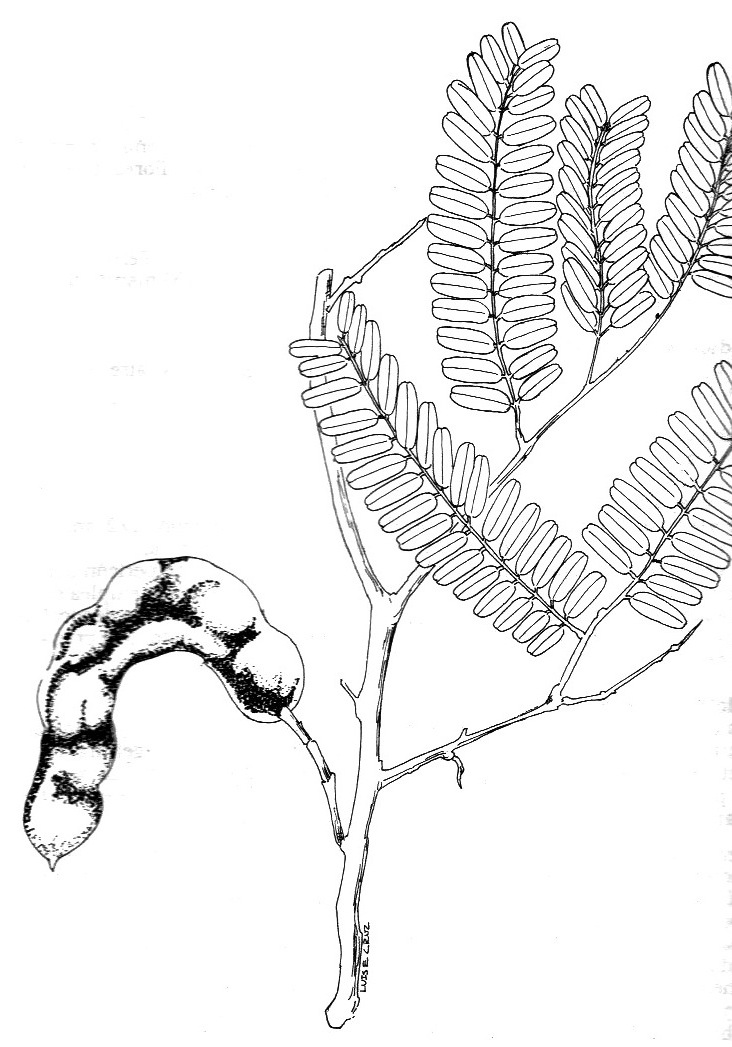
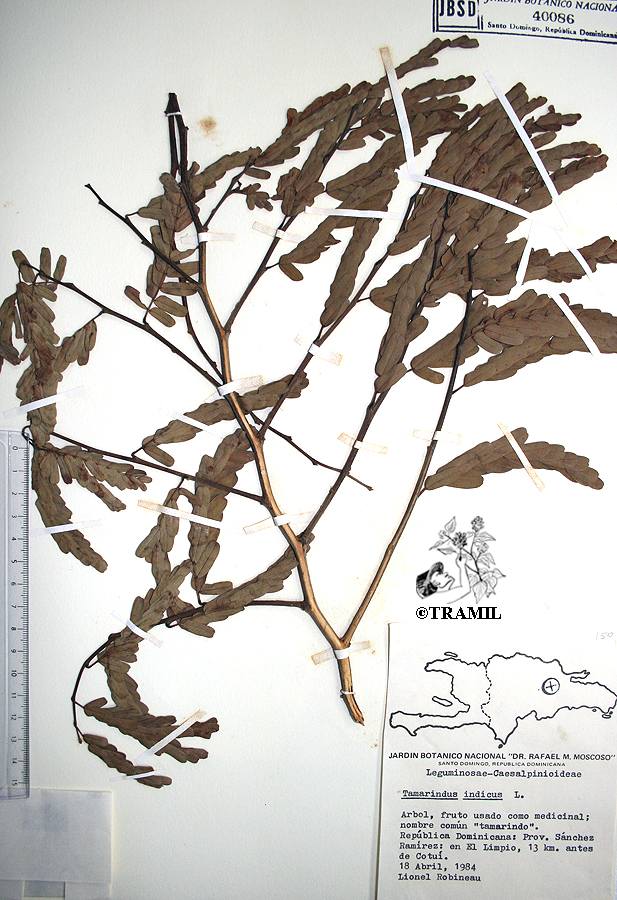
Tree of up to 20 metres. Paripinnate leaves 5 to 15 cm long, 10 to 20 pairs of oblong leaflets. Inflorescences in short racemes with few flowers, axillary or terminal; calyx 4 parted, yellowish white with reddish tones; 5 petals, 2 small and scale-shaped and 3 large, oblanceolate, pale yellow glabrous tinged with orange or red. Indehiscent pod, 4 to 13 cm long, light brown in colour. Indehiscent seeds, from 1 to 12, oval compressed laterally, brown in colour.
Voucher(s)
Jiménez,692,JBSD
Germosén-Robineau,48,JBSD
Martínez,4670,ROIG
Fuentes,4786,ROIG





Pharmacopoeia
Ed.3References
1 LONGUEFOSSE JL, NOSSIN E, 1990-95
Enquête TRAMIL. Association pour la valorisation des plantes médicinales de la Caraïbe AVPMC, Fort de France, Martinique.
2 GERMOSEN-ROBINEAU L, GERONIMO M, AMPARO C, 1984
Encuesta TRAMIL. enda-caribe, Santo Domingo, Rep. Dominicana.
3 GARBA M, YAKASAI IA, BAKARE MT, MUNIR HY, 2003
Effect of Tamarindus indica L. on the bioavailability of ibuprofen in healthy human volunteers. Eur J Drug Metab Pharmacokinet 28(3):179-184.
4 MUSTAPHA A, YAKASAI IA, AGUYE IA, 1996
Effect of Tamarindus indica on the bioavailability of aspirin in healthy human volunteers. Eur J Drug Metab Pharmacokinet 21(3):223-226.
5 MAHMOUD BM, ALI HM, HOMEIDA MM, BENNETT JL, 1994
Significant reduction in chloroquine bioavailability following coadministration with the Sudanese beverages Aradaib, Karkabi and Lemon. J Antimicrob Chemother 33(5):1005-1009.
6 SAMBAIAH K, SRINIVASAN K, 1989
Influence of spices and spice principles on hepatic mixed function oxigenase system in rats. Indian J Biochem Biophys 26(4):254-258.
7 ASWAL BS, BHAKUNI DS, GOEL AK, KAR K, MEHROTRA BN, MUKHERJEE KC, 1984
Screening of Indian plants for biological activity: Part X. Indian J Exp Biol 22(6):312-332.
8 WATT JM, BREYER-BRANDWIJK MG, 1962
Medicinal and poisonous plants of Southern and Eastern Africa. Edinburgh & London, UK: 2nd ed. E. & S. Livingstone Ltd., 1457pp.
9 DUKE JA, ATCHLEY AA, 1986
Handbook of proximate analysis tables of higher plants. Boca Raton, USA: CRC Press. p156.
10 ARVIS PY, JOYEUX M, FLEURENTIN J, MORTIER F, PELT JM, 1986
Influences d’extraits de Cuscuta americana et Tamarindus indicus sur hépatocytes fraîchement isolés de rats. Travail TRAMIL. Laboratoire de pharmacognosie, Centre des Sciences pour l’Environnement, Metz, France.
11 MORON FJ, MOREJON Z, VICTORIA MC, BACALLAO Y, FUENTES V, 2009
Acción sobre el tránsito intestinal del zumo fresco del fruto maduro de Tamarindus indica L. (tamarindo) en ratones. Trabajo TRAMIL. Laboratorio Central de Farmacología, Facultad de Ciencias Médicas “Dr. Salvador Allende”, La Habana, Cuba.
12 ALI N, SHAH S, 2010
Spasmolytic activity of fruits of Tamarindus indica L. J Young Pharm 2(3):261-264.
13 FENG PC, HAYNES LJ, MAGNUS KE, PLIMMER JR, SHERRATT HS, 1962
Pharmacological screening of some West Indian medicinal plants. J Pharm Pharmacol 14:556-561.
14 KHALID S, SHAIK MOSSADEQ WM, ISRAF DA, HASHIM P, REJAB S, SHABERI AM, MOHAMAD AS, ZAKARIA ZA, SULAIMAN MR, 2010
In vivo analgesic effect of aqueous extract of Tamarindus indica L. fruits. Med Princ Pract 19(4):255-259.
15 RANJAN R, SWARUP D, PATRA RC, CHANDRA V, 2009
Tamarindus indica L. and Moringa oleifera M. extract administration ameliorates fluoride toxicity in rabbits. Indian J Exp Biol 47(11):900-905.
16 PIMPLE BP, KADAM PV, BADGUJAR NS, BAFNA AR, PATIL MJ, 2007
Protective effect of Tamarindus indica Linn against paracetamol-induced hepatotoxicity in rats. Indian J of Pharmaceutical Sciences 69(6):827-831.
17 MARTINEZ MJ, MOREJON Z, LOPEZ M, BOUCOURT E, FUENTES V, MORON F, 2005
Clases tóxicas agudas (CTA) de una decocción de corteza del tronco de Tamarindus indica L. Informe TRAMIL. Laboratorio Central de Farmacología, Facultad de Ciencias Médicas “Dr. Salvador Allende”, La Habana, Cuba.
18 MARTINEZ MJ, MOREJON Z, LOPEZ M, BOUCOURT E FUENTES V, MORON F, 2005
Clases tóxicas agudas (CTA) de decocción de pulpa de fruto fresco de Tamarindus indica L. Informe TRAMIL. Laboratorio Central de Farmacología, Facultad de Ciencias Médicas “Dr. Salvador Allende”, La Habana, Cuba.
19 MARTINEZ MJ, MOREJON Z, LOPEZ M, BOUCOURT E, FUENTES V, MORON F, 2005
Clases tóxicas agudas (CTA) de una decocción de hoja fresca de Tamarindus indica L. Informe TRAMIL. Laboratorio Central de Farmacología, Facultad de Ciencias Médicas “Dr. Salvador Allende”, La Habana, Cuba.
20 MOHAMEDAIN KM, MOHAMED OSA, EIBADWI SMA, ADAM SEI, 1996
Effect of feeding Tamarindus indica ripe fruit in brown hisex chicks. Phytother Res 10(7):631-633.
21 JOYEUX M, MORTIER F, FLEURENTIN J, 1995
Screening of antiradical, antilipoperoxidant and hepatoprotective effects of nine plant extracts used in Caribbean folk medicine. Phytother Res 9(3):228-230.
22 PILOTO FERRER J, VIZOSO A, RAMOS A, GARCIA A, REMIGIO A, VEGA Y, GONZALEZ ML, RODRIGUEZ C, CARBALLO C, 2009
Plantas medicinales. Diez años de evaluaciones toxicogenéticas en el CIDEM. Boletín Latinoamericano y del Caribe de Plantas Medicinales y Aromáticas 8(5):428-434.
23 RODRIGUEZ RI, AVILES L, 1995
Evaluación del efecto de las hojas de la especie Tamarindus indica L. sobre la morfología de los espermatozoides. Tesis de Diploma en opción al título de Licenciado en Ciencias Farmacéuticas. Universidad de Oriente, Santiago de Cuba.
24 SIVASWAMY SN, BALACHANDRAN B, BALANEHRU S, SIVARAMAKRISHNAN VM, 1991
Mutagenic activity of South Indian food items. Indian J Exp Biol 29(8):730-737.
25 PASCUAL JR, 1993
Toxicidad aguda oral de las hojas de Tamarindus indica. Informe de trabajo. Grupo de Toxicología Experimental, Instituto Superior de Ciencias Médicas, Santiago de Cuba. Inédito.
26 DEHESA MA, 2005
Contribución al estudio químico farmacéutico de las hojas de la especie Tamarindus indica L. Tesis en opción al grado científico de Doctor en Ciencias Farmacéuticas. Universidad de la Habana, Cuba.
27 NATURAL STANDARD, 2011
Tamarind (Tamarindus indica L.). Foods, Herbs & Supplements. http://naturalstandard.com/index-abstract.asp?create-abstract=flashcard…. asp&title=Tamarind (25dic2011)